
How stress affects us on a molecular level—and how joy can help “lighten the load”
Transcript
Dr. Ellen Beckjord: Stronger communities begin with good health—for everyone. You’re listening to the “Good Health, Better World” podcast, presented by UPMC Health Plan.
This season, we’re exploring ways to achieve good health in today’s complex world. I’m your host, Dr. Ellen Beckjord. Let’s get started.
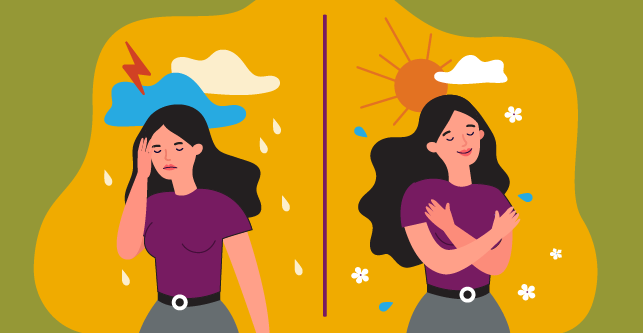
In this episode, we're joined by Dr. Crystal Clark to hear about whole-person health. How stress, but also how joy, laughter, and companionship affect us on a molecular level to literally “lighten the load.”
Dr. Clark is currently the chief medical officer of Community HealthChoices at UPMC Health Plan, and senior advisor to the Center for Social Impact at UPMC. Dr. Clark, welcome to “Good Health, Better World.”
Dr. Crystal Clark: Thank you so much. It's great to be here.
Dr. Ellen Beckjord: This season we've been talking a lot about contextual factors, things in the environment. But we're thrilled that you're here to talk with us about how the environments around us affect us on a biological or a cellular level. So could we start there? Can you share from a clinical perspective why the environment around us is important when we think about what's happening inside our bodies?
Dr. Crystal Clark: You know, I think of it as two types of challenges from the environment. So we have direct challenges. And when we think about pollutants in the air and inhaling those into the lungs and the direct impact on the lung cells themselves—that it causes inflammation, it causes increased mucus, it causes a constriction or narrowing of those airways directly from certain pollutants in the air. The same thing with the GI tract—certain substances that are in our foods can sometimes cause irritation in the cells that line our GI tract that make them actually lose their adherence to one another so things can leak into the body. They also can impact the cells in our GI tract, so we don't absorb all the nutrients that we should from our food.
So those are direct impacts at a cellular level of environmental stressors. But what I wanted to talk about today was some of [what] I’ll call for lack of a better phrase reactive or indirect stressors—stress itself that can permeate down to the cellular level. And for many parts of my career and for other clinicians, stress was something that was perceived as essentially emotional.
You know, we didn't, you didn't want stress, everybody wanted to reduce their stress—but we didn't really talk about [how] it could have a direct impact on the cellular function and organ function in the body. And we've moved forward to understand just how much impact it has.
Dr. Ellen Beckjord: Could you explain the concept of allostatic load and what happens in our bodies when we experience physical or emotional stress—or, as you said, direct or, in particular, that indirect stressor.
Dr. Crystal Clark: Well when we experience stress, the body has a mechanism particularly led by the brain that helps us react. Many of us have heard that phrase fight or flight. So do I stay and fight or do I move away and get myself to safety? And the brain sets off a cascade of hormones and substances that send increased blood flow to the muscles, increased blood flow to the brain. So you're more alert. You're more acute. It helps us break down glucose—sugar—so that we have more energy to get our body either out of that unsafe situation or stay there and do our best to fight.
So that response—it's an acute response—is great, it’s lifesaving actually. If trauma is involved in that acute episode, it can also help us with blood clotting and things like that. So we're in a stressful situation, the body is trying its best to help us extricate ourselves, stay in flight; or if we have to fight, survive whatever physical impact comes next. So it's a great system. The challenge is when that feeling of fight or flight is constant, when we don't have a break so that all those systems can kind of settle themselves down and you go back to normal function.
And I think most people could understand that if your body feels—whether it really is under alert and attack all the time, even if you perceive that you are in an attack situation or fight or flight situation all the time and those elevated levels and those elevated stimuli to all your major organs stay at high alert—it becomes detrimental and damaging over time.
And so, Bruce McEwen back in 1993 coined the term “allostatic load,” which is what happens to the body when you are in this constant state of stress, this high alert level, and what that constant state of stress and those constant signals being sent to the organ systems, how that piles up and what it does to your body.
Dr. Ellen Beckjord: I've heard the analogy, and I'd love to hear your take on whether this is useful, of like a car. So I have a I have a vehicle, and right now it's parked in a parking lot. And I've heard the analogy of it's like slamming your foot on the gas when the car is in park. You know, if I was constantly revving my engine when the car was in park, and I never gave my car a chance to just actually be parked and let its systems rest, I would probably encounter a lot of problems with that car when I actually had to drive it at some point. Is that a fair analogy?
Dr. Crystal Clark: I think it is. I would just add that…that analogy, if you have your foot on the gas, you can hear the car revving, so you know that you are in a revved-up mode. I think with allostatic load, and I think that's one of the important issues here, is that some of that revving is at the organ system level—the heart, the kidneys, the liver, the endocrine system—and you don't know that it's revving. It's revving, but you just don't know it. And you unfortunately still get the consequences of that revving without even being aware that it's happening.
Dr. Ellen Beckjord: Dr. Clark, when people experience this kind of chronic stress, is it also possible that they can habituate to it? So even if there is some revving, if you will, that's noticeable—like my heart rate is elevated or I might feel sweaty—can a person exist in this state so often that they can start to almost fail to recognize it as something other than normal or restful? Can people just get so used to it that it's even hard to catch it when it's happening, to signal them to maybe do something that would help?
And then I would love to talk about what your perspective is on things that folks can do that would help. But can people get so used to this that one of the biggest challenges is it's just kind of hard to notice that it's happening at all?
Dr. Crystal Clark: Well, that's one of the beautiful things and the sad things about the body. We will accommodate that revving. We will accommodate that increased assault on our heart, on our lungs, on our GI tract and so on; on our immune system, on our thinking even—our way we make decisions and our memory. We will learn to and the body will try and compensate for that.
But the compensation usually starts to fail over time. And that will start to manifest with elevated blood pressure, elevated blood sugar, increased infections because your immune system is not at peak performance, increased respiratory infections. And what we tend to call now chronic disease. I don't want to imply that chronic disease is caused solely by external stressors, but the evidence is strong that it is a major contributor to the development of chronic disease. And therefore, we have to treat it. And that's medications and things of that nature. But the whole point is to stop and maybe give credence to the fact that this might be being precipitated by something modifiable rather than just treating with medication.
Dr. Ellen Beckjord: I would love to talk with you about all of the reasons that such large numbers of people—and distributed inequitably—experience chronic stress. And I know that you have a lot of expertise in that and valuable perspectives, and we certainly can talk about that if you'd like to.
However, I'd also love to hear your perspective on what are ways people can—and even systems like health care systems—can intervene to help people who experience chronic stress manage this physiological response in a way that is helpful for both their emotional and physical health.
Dr. Crystal Clark: That's such a great question. And if I can step back just for a second, back to Dr. McEwen's model, one of the things he talks about that drives the burden of stress that we feel is how much exposure we have to stress, the magnitude of the reactivity. So how we respond to those stressors, how quickly we can recover. And again, that goes back to those signals and those systems being able to downshift back to baseline if they perceive some calm that they can go back to baseline.
So when we talk about how can we help, what can we do? When I was treating patients, the first thing I liked to do is to help people who were facing chronic disease, help them understand that some of this is not a complete lack of concern, willpower, or compliance on your part. And empowering your patient that there are other things at play here that are right now out of your control and we have to work together to help you navigate that, is very empowering to people who seem to have this cascade of chronic diseases that come on over time.
I mean, there are people who've worked hard all their lives and suddenly they have blood pressure that's out of control. Diabetes is out of control. And they're getting infections and they don't think as clearly. And they start to believe it is entirely because of lack of focus and concentration on health and wellness. And some of it can be, but some of it is being driven by these other factors that we've talked about that impact their ability to prioritize or focus on all the things that impact chronic disease.
So one of the things I love to do is talk to people about: All your life circumstances matter. All of them. So not just what your weight is and your blood pressure and how you’re doing with your exercise; but also, what's going on at home? How's the family doing? What's going on in your community? Are you thinking about retirement? How is work doing? All of that is important to that person and to that family that that person is a part of. So we, in my opinion, we need to understand that. We may not be able to fix it.
And sometimes we get afraid to ask people questions because they may give us answers that we quote unquote “can't fix.” But it's not always the point to fix it. Sometimes just giving voice to the challenges that a patient is facing and allowing them to say it out loud. And maybe you can construct an alternative approach to helping them manage it, maybe you can't—but most people feel empowered and better when they've been able to talk about what they're facing, how they're trying to fix it, and getting some advice if possible. So that's one of the things I would love to leave listeners with.
I would say the second thing is control the controllables first. So getting enough sleep, trying to modify your diet—you know, finances may be an issue or access to vegetables, all those things, but do your best to control what you can. Noise; try and reduce noise. Try and improve air quality where you can where you live.
And then the other issues—violence perhaps in your community, stressors from work or the industry that you're in—that might take partnership with other folks and other entities (community-based organizations, your politicians). So that might take more effort and it might take more time, but let’s control what you can control first. And as you start to make some progress in those areas, that will give you the benefit of feeling like you have a little bit of a leg up on trying to bring these things under control.
Meditation, for example, is a great way to try and start your day and help you get context around there's a lot going on, but today I'm going to focus on the most important tasks. And when I get those done, I know I will feel more empowered. Just as an example of how you can do some things for yourself first.
And then the last thing I would say is, how do we move the conversation forward among those folks in the clinical community to understand allostatic load and discuss capturing and measuring some of this in our primary care visits—dare I say, almost like an additional vital sign.
And there are formal ways to measure allostatic load (markers in the blood and there's self-reported surveys that you can take that report your perceived level of stress, which is great) but even just having conversations with patients and asking them to assess, giving them the room to talk about it and documenting that, so the next time they come, we can kind of measure up: How have things improved, Mr. Smith? How are things going, Mr. Jones? That is powerful in itself. So those would be the three things I would love people to think about from this fantastic discussion.
Dr. Ellen Beckjord: May I ask how long you've been a physician?
Dr. Crystal Clark: Oh [laughs]. If you count from the day I graduated from medical school, it’s been over 30 years.
Dr. Ellen Beckjord: OK, I wanted to ask a question specifically about social engagement, social interaction, social support. And I was curious about if that's something you think is in the mix of positive things folks can do, like reduce social isolation and be socially engaged when it comes to managing chronic stress. But over the 30 years of your career, you've been doing this work over an arc of time where the way we interact with one another has significantly changed. You know, you and I are having a conversation right now via synchronous video. I can remember seeing that in certain movies as like, a future. Like, what if you could see somebody's face when you talk to them on the telephone, right? And now we do it every day. But I'd love to hear your perspective on the role of social engagement and social support when it comes to managing chronic stress and how you've seen technology perhaps both facilitate and maybe hinder that as it's become more common in the way we engage with one another.
Dr. Crystal Clark: Stress in particular, when you are socially isolated—and you can be socially isolated and still be living with other people, people just kind of go about their own way and you don't really dialog about things, but particularly when you're alone—we know that things feel magnified often when you are trying to manage them alone.
So social isolation can make many things feel bigger or more intense. It can even manifest itself in physical symptoms and feelings. So social isolation is a problem. We believe it also has some impact on cognitive function.
So, I worry quite a bit that our technology—which is so wonderful in many situations like the one we’re having today where we can talk and we're in two different parts of the state—but I worry that the human connection, hearing and seeing body language, being able to react quickly and directly with that person, I think it does have a tremendous impact on how people navigate the stressors in this world right now.
Dr. Ellen Beckjord: Yeah. Dr. Clark, you've talked about the challenges that we can experience physically and emotionally in the face of chronic stress and ways that we can seek to alleviate that stress. Could you also talk about how really positive experiences like joy, laughter, companionship—how do those things function to support us to promote positive physical and emotional health?
Dr. Crystal Clark: Well, I think it's very, very important. And one of the most important things that we learned about chronic stress is, again, the perception of stress and the reality of stress—your perception is your reality. So if you feel particularly stressed, whether that's actually as severe as you think, it doesn't matter. If you perceive it as severe, it’s severe. So, one of the things that we know is if you can be exposed or begin to feel some hope, that this too shall pass as my great-grandmother used to say, that you can experience joy even for small periods of time—maybe with others, maybe everyone in your community acknowledging tough times, but using that as a catalyst to come together.
There is opportunity. And I think it does really make a difference when you can help expose a person or families or communities to opportunities to experience joy—even when the load is large and burdensome, to share joy, to share gratitude, to share resources. And it makes a difference. It might actually give a small break in that allostatic burden where some of those fight or flight responses can actually calm down for an hour or two.
Dr. Ellen Beckjord: Thank you for sharing that. Is there anything else you'd like to share with listeners about good whole-person health? You've shared wonderful strategies for managing chronic stress, and I think a lot specifically that could help empower people listening to discuss these things with important people in their lives, including their health care providers, in ways that are productive. But is there anything else you'd like to share on this topic or that's top of mind for you?
Dr. Crystal Clark: I think the one last thing, and thank you for giving me the opportunity to say this: I think that there are subpopulations in America that face more challenges than others—access to good food, access to a living wage, access to transportation to go to places and enjoy and spend time with others. There are many groups right now that feel targeted and feel disenfranchised and those feelings and those experiences will impact them physically, will impact their children and their families physically.
So maybe we can think about the long-term impacts of how we take care of folks, the whole person, and really step back and look at targeting and disproportionately impacting certain groups.
Dr. Ellen Beckjord: Absolutely. I think that that's a really important idea to end on and I'm glad that you raised it. And [it] makes everything that you talked about today more important than ever.
So, Dr. Clark, I want to thank you again for taking time out of your busy schedule to join us on “Good Health, Better World.” It's always so good to talk with you. I'm grateful to be your colleague, and we appreciate your time.
Dr. Crystal Clark: Thank you so much, Dr. Beckjord, and I'm always happy to be a part of this fantastic podcast series.
Dr. Ellen Beckjord: We hope you enjoyed this episode of “Good Health, Better World.” Be sure to tune in next time and visit upmchealthplan.com/goodhealth for resources and show notes.
This podcast is for informational and educational purposes. It is not medical care or advice. Individuals in need of medical care should consult their care provider.
Views and opinions expressed by the host and guests are solely their own and do not necessarily reflect those of UPMC Health Plan and its employees.